

The marketing world is experiencing its most significant transformation since the rise of digital advertising. Large language models and AI-powered tools aren’t just changing how we execute campaigns, they’re fundamentally reshaping what it means to be a marketing agency. This shift demands that agencies evolve from tactical channel specialists to strategic business consultants who can navigate an increasingly complex and interconnected digital landscape.
In this article, you’ll learn how AI is forcing agencies to evolve from channel executors to strategic business partners, what this transformation looks like in practice, and how to position your agency or marketing team to thrive in this new era.
In this guide:
- Key Takeaways
- The Search Landscape Transformation
- The Impact of AI on Marketing Operations and Strategy
- From Channel Specialists to Platform-Agnostic Strategists
- Digital Marketing Agencies and AI Implementation
- Industry Transformation Timeline and Milestones
- Future Agency Landscape: Winners and Losers
- Conclusion: Embracing the Strategic Evolution
Key Takeaways
- AI is accelerating the shift from channel-specific expertise to integrated, strategic thinking
- Successful agencies are using AI to augment human creativity, not replace it
- The transformation requires organizational restructuring, not just new tools
- Client relationships are evolving from service delivery to strategic partnership
- The timeline for adaptation is shorter than most agencies realize
The Search Landscape Transformation
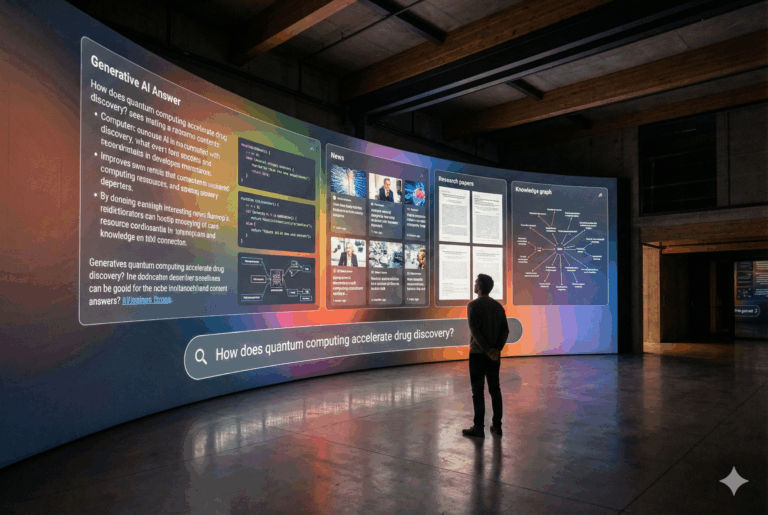
The rise of alternative search tools is creating a more fragmented search landscape that agencies must navigate strategically. Perplexity had 22 million active users in the first half of 2025, up by two million from October 2024, and answered 250 million queries, emerging as a legitimate search alternative.
However, despite the excitement around AI as a search competitor – even if one were to assume 100% usage across ChatGPT, Claude, and Gemini, the combination of all AI tools would remain less than 2% of the search market. Despite this, forward-thinking SEOs are developing specific strategies for ranking in AI answers, treating it as a new search ecosystem. We will see if AI evolves to a true search competitor to Google or if it will remain a search companion.
Voice search presents a more substantial disruption, with significant adoption rates driving new optimization requirements. In the U.S. alone, around 86.5 million people rely on Siri, while Alexa has about 77.2 million users globally, and Google Assistant is expected to surpass them both, with projections estimating 92 million users in the United States by 2025. Voice search queries have become increasingly conversational and natural compared to traditional text-based searches, requiring agencies to optimize for natural language patterns rather than traditional keyword structures. New semantic relevance systems like those used by AI attempt to understand how humans actually use language to connect ideas and are increasingly driving search.
The Impact of AI on Marketing Operations and Strategy
Large language models bring both tremendous pressure and unprecedented potential. By adopting AI-driven tools, agencies can shift from reactive operations to predictive, strategic planning.
Organic and Paid Search
AI is reshaping organic and paid search strategies. Traditional keyword-focused SEO is evolving toward semantic relevance and natural language optimization as AI search tools gain traction. Meanwhile, paid search campaigns benefit from AI’s predictive targeting and real-time optimization capabilities, allowing for dynamic bid adjustments and audience refinement at unprecedented speed. The key shift is moving from reactive keyword management to proactive audience intent modeling, where AI anticipates user needs rather than simply responding to search queries.
Content Marketing
AI tools like DALL-E, ChatGPT, and Adobe’s generative AI for video are transforming content production. This shift offers speed and efficiency but also raises concerns about preserving brand authenticity and informational accuracy. Forbes notes that successful agencies are not discarding creatives but reimagining their roles, pairing human ingenuity with AI assistance to create bold, resonant campaigns.
New workflows are necessary to bridge AI content production with human-led quality control. Agencies must build frameworks for collaboration, ensuring that the creative spark and human ingenuity are not overshadowed but complemented by AI.
Data Analysis and Strategic Insights
AI provides analysis beyond human ability, especially in identifying patterns through comprehensive data modeling. Marketers who use these tools to offer insights into emerging market trends, competitor strategies, or predictive sales forecasting will unlock new avenues to demonstrate their value.
Hyper-Personalization
Marketers can now hyper-personalize campaigns, using real-time insights into individual behavioral patterns. However, this acceleration requires agencies to adopt advanced AI tools capable of handling the scale and managing campaign quality. Quality assurance becomes a major concern when just-in-time content generation goes directly to audiences without a human touch.
Dynamic optimization is another key advantage. Platforms can continuously tweak paid ads, visuals, or web formats to maximize conversions across segments. These capabilities set the stage for more granular ROI analytics.
From Channel Specialists to Platform-Agnostic Strategists
Before AI, marketing often revolved around specialization. But today, audiences don’t compartmentalize their lives. They search for information, interact with brands, and consume content across overlapping and evolving platforms.
Omnichannel marketing has become essential in this landscape. Audiences expect a seamless and consistent experience, whether they’re engaging via a website, social media, email, or even in-store. AI-driven tools amplify this shift, integrating platforms more tightly than ever before and redefining how customers discover and connect with brands. For marketers, this means adopting strategies that transcend individual channels and align with broader omnichannel goals.
Campaigns must deliver a unified message and experience across every touchpoint. This could range from a voice assistant’s personalized reply to a cohesive interaction between a social ad and an AI-powered search result. By fostering a platform-agnostic yet omnichannel mindset, marketers can adapt to these interconnected digital journeys and meet their audiences wherever they are.
Digital Marketing Agencies and AI Implementation
Becoming a strategic leader in zero-click marketing requires changes to how teams are structured, how skills are developed, and how value is communicated. Whether you’re managing campaigns from within a brand or overseeing accounts at an agency, adapting to an AI-driven world starts with rethinking the way your team operates and delivers results.
For Agencies: Restructuring for Strategic Partnership
Agencies must fundamentally rethink their organizational structure and service delivery model to remain relevant in an AI-driven world.
- Cross-Functional Team Integration: The most successful agencies are breaking down traditional department walls. Instead of having separate paid media, creative, and analytics teams that occasionally collaborate, leading agencies are creating integrated pods that work together daily. This means pairing content creators with data analysts from project kickoff, not just at review meetings.
- Evolving Service Models: The shift from hourly billing to outcome-based pricing requires agencies to develop new capabilities in business consulting, not just marketing execution. This might mean bringing in talent from management consulting backgrounds or training existing staff on financial modeling and business strategy.
- Client Education as Core Service: Forward-thinking agencies are positioning themselves as change management consultants, helping clients navigate not just AI adoption but the broader organizational changes that come with it. This includes educating C-suite executives about realistic timelines and helping internal teams restructure their processes.
For In-House Teams: Avoiding the Silo Trap
In-house marketing teams face different challenges, particularly around resource allocation and cross-channel integration.
- Strategic Platform Planning: Unlike agencies that can spread costs across clients, in-house teams must be more deliberate about AI investments. This means developing a strategic roadmap that prioritizes tools based on business impact, not just availability. Consider how each new AI capability will integrate with existing systems before making purchases.
- Building Internal Expertise: In-house teams often hire specialists for individual channels—a Google Ads expert, a social media manager, an email specialist. While this worked in the past, AI’s power lies in cross-channel integration. Consider restructuring hiring to prioritize generalists who can think across multiple touchpoints, or invest in training existing staff to broaden their skill sets.
- Stakeholder Management: In-house marketers must excel at internal communication and expectation management. This means translating AI capabilities into business language for leadership while managing realistic timelines for implementation. Unlike agency clients who expect regular updates, internal stakeholders may need more education about why AI initiatives take time to show results.
Collaboration Between Agency and In-House Teams
The most successful AI implementations happen when agencies and in-house teams complement rather than compete with each other.
- Agencies Provide Strategic Oversight: Agencies bring cross-industry experience and specialized expertise that in-house teams often lack. They can identify opportunities and best practices from other sectors while helping brands avoid common implementation mistakes.
- In-House Teams Provide Business Context: Internal teams understand the nuances of their business, regulatory requirements, and stakeholder dynamics that even the best agencies struggle to grasp. They’re also better positioned to manage long-term relationship building with AI vendors and internal training programs.
- Shared Accountability: The most effective partnerships establish clear accountability for AI initiatives. Agencies might be responsible for strategy development and initial implementation, while in-house teams handle ongoing optimization and internal adoption. Both sides should be measured on business outcomes, not just their individual contributions.
Industry Transformation Timeline and Milestones
For marketers, the arrival of AI offers both challenges and opportunities. Success will depend on making strategic, forward-looking decisions as developments unfold.
The timeline below outlines the industry’s expected progression, from immediate adjustments to long-term strategic advancements.
Near-Term Evolution (1-2 Years)
The next two years will be defined by rapid adaptation to a fragmented search ecosystem and the growing need for multi-channel campaign management. AI tools are already changing how marketers approach audience targeting, creative production, and campaign optimization. For marketers, the challenge will be to integrate these tools into workflows without disrupting existing client or stakeholder relationships.
Practical Steps for Marketers:
- Adopt AI-Driven Campaign Tools: Begin incorporating AI platforms for tasks such as audience analysis, content creation, and predictive ad placements. Tools like ChatGPT for brainstorming or Looker Studio for analytics can give you a competitive edge.
- Focus on Cross-Channel Coherence: Develop strategies that ensure consistency across platforms. For example, if your audience interacts with your brand on Instagram and receives follow-ups via email, the messaging and tone need to align seamlessly.
- Monitor AI-Search Integration Closely: With more users engaging with AI-driven search engines like Google’s AI overviews and Perplexity, ensure your content is optimized for these platforms. This includes tailoring material for natural language queries and creating utility-driven content that AI is likely to cite.
- Educate Teams and Stakeholders: Provide training on emerging AI tools and explain the importance of adapting to these changes, emphasizing both short-term benefits and long-term positioning.
Medium-Term Transformation (3-5 Years)
Over the next three to five years, the marketing industry will likely shift further from execution-oriented approaches to strategic consultation. Marketers will need to evolve into trusted advisors capable of addressing not just campaign goals but broader business objectives. This transition will require deeper market expertise, stronger analytical capabilities, and a focus on customized solutions for diverse client or customer needs.
What To Expect:
- Deeper Intelligence Capabilities: Predictive analytics and robust audience modeling will become the norm. By leveraging these tools, marketers can provide clients or stakeholders with data-driven forecasts that influence strategic decisions.
- Content Personalization at Scale: AI will enable hyper-personalized campaigns that resonate with individual users. Imagine creating ad variations tailored to the unique preferences of users, down to their purchasing habits, geographic location, or even mood.
- Enhanced Collaboration Models: Cross-functional teams with a mix of creative, analytical, and technical expertise will become essential. Expect to see marketers leading efforts that coordinate between departments or even partnering with external experts to deliver integrated strategies.
- Technology-Informed Client Relationships: Whether you’re briefing a brand executive or managing agency accounts, discussions will pivot toward using AI to solve business problems, like reducing churn or improving customer retention, rather than focusing solely on ad performance.
Practical Strategies for This Period:
- Build your expertise in niche areas that align with broader business strategies, such as sustainability-focused marketing or customer experience optimization.
- Partner with AI developers to expand resources and keep your solutions ahead of competitors.
- Offer value through actionable insights, such as scenario planning or competitive analysis that helps clients or teams anticipate and respond to market changes effectively.
Long-Term Strategic Positioning (5+ Years)
By the five-year mark, the transformation of the marketing industry will likely reach maturity. Leading marketers will operate as business strategists rather than campaign managers, offering comprehensive insights that impact everything from product development to long-term growth strategies. AI will be a standard tool in every marketer’s arsenal, but success will depend on how effectively humans and machines work together to innovate and create value.
Key Characteristics of the Future Marketer:
- Industry Expertise: Marketers will need deep knowledge of the industries they serve. Generic marketing skills will no longer suffice. Specialization, supported by robust AI-driven intelligence, will distinguish leaders in the field.
- Proactive Innovation: Staying ahead means not just responding to trends, but setting them. Marketers must think beyond current demands, using tools, data, and creativity to identify the next big opportunity for brands.
- Outcome-Oriented Strategies: Metrics such as lifetime customer value, brand equity, and market influence will take precedence over short-term KPIs like click-through rates or impressions.
Long-Term Actions to Consider:
- Develop expertise in the integration of AI and human creativity. Understanding how to balance AI’s efficiencies with human innovation will be essential for creating emotionally resonant campaigns.
- Build partnerships or teams that focus on comprehensive business consulting rather than isolated marketing solutions.
- Foster continuous learning within teams, ensuring your organization is equipped to adapt to future advancements in both AI and broader digital trends.
Future Agency Landscape: Winners and Losers
Marketers, whether working in-house for a brand or at an agency, are navigating a landscape where adaptability is no longer optional. Some will seize this moment, mastering innovation and strategy to unlock new value. Others, stuck in outdated practices, risk falling behind. To thrive in this AI-driven era, marketers must understand what defines success and learn to identify and avoid the pitfalls that lead to stagnation.
Characteristics of Successful Strategic Agencies
Marketing strategies that excel in this evolving landscape share a few standout traits. These aren’t just about adopting the latest trend; they’re about putting innovation to work in ways that align with long-term business goals and audience needs.
- Industry Depth and Relevance: The best marketers dig deep into the industries they serve. Whether you’re launching ecommerce campaigns or driving B2B lead generation, knowing the unique challenges, customer behaviors, and competitive dynamics of your field is critical. This level of expertise enables marketers to craft strategies that resonate and respond to real-world conditions.
- Strategic Thinking Beyond Campaigns: Marketing is no longer just about creating great ads or generating clicks. Success demands understanding high-level objectives like customer retention, revenue growth, and brand loyalty. Marketers who can tie their work directly to these outcomes will stand out as invaluable contributors to business success.
- Integrated Execution: Gone are the days of operating in silos where the data team works independently from the creative team. Today’s most effective marketers blend analytical insights with storytelling to build campaigns that are as compelling as they are strategic. A unified approach allows for seamless alignment across paid ads, organic content, email campaigns, and beyond.
- Tech-Savvy Leadership: AI is transforming how marketers gather insights, execute campaigns, and measure success. Winning strategies leverage advanced tools like predictive analytics, content generation platforms, and customer experience optimizers—not just as novelties, but as integral parts of an agile workflow. These marketers use technology not only to create efficiencies but to solve complex challenges in creative ways.
Marketers who excel also know how to build trust, whether with clients, colleagues, or leadership. By framing AI as an opportunity rather than a threat, they guide others through change with confidence. For instance, explaining how shifting from traffic-based metrics to a zero-click optimization approach impacts overall ROI demonstrates a forward-focused mindset that builds credibility.
Risks for Traditional Channel-Focused Agencies
Sticking to old-school methods is not an option with the rapid pace of change. Whether you’re part of a brand team or an agency operation, holding onto outdated practices will leave you struggling to compete.
- Over-Reliance on Single Platforms: Marketers still doubling down on just one platform, like Facebook or Google Ads, need to rethink their strategy. AI is enabling cross-platform integration, and consumers interact across multiple touchpoints. If your strategies don’t adapt to this reality, you risk becoming irrelevant when platforms shift or audiences migrate elsewhere.
- Resistance to AI Integration: Failing to adopt AI tools is one of the fastest ways to lose your edge. From predictive targeting to hyper-personalization, AI is reshaping what’s possible. Yet, some marketers are hesitant to move away from legacy systems or workflows. Without the efficiency and insight AI provides, keeping pace with competitors will become increasingly difficult.
- Using Outdated Metrics: Success can no longer be defined by simple metrics like traffic or ad impressions. Businesses are looking to metrics like customer retention, lifetime value, and brand impact to measure success. Marketers who cling to older ways of measuring effectiveness may struggle to prove their value and justify their budgets.
- Lack of Team Collaboration: If your team operates in silos, your results will suffer. Today’s marketing challenges require collaboration across creative, data, strategy, and technology. Teams that don’t integrate these disciplines risk incomplete or underperforming campaigns.
- Short-Term Thinking: Marketing strategies focused solely on today’s returns miss bigger opportunities. Marketers who fail to position their efforts as part of a long-term growth strategy risk limiting their impact. Leaders and stakeholders expect marketing investments to contribute to enduring brand and business outcomes.
The marketers who thrive will be those who balance adaptability with purpose. Changes in technology and consumer behavior create challenges, yes, but they also create opportunities for those willing to evolve. The key is to remain agile, leverage data and AI wisely, and maintain a clear focus on the bigger picture.
Conclusion: Embracing the Strategic Evolution
The transformation from execution-focused agency to strategic partner doesn’t happen overnight, but it starts with a clear understanding of where you add irreplaceable value.
If you’re an agency leader, stop selling hours and start selling outcomes. Your clients don’t need another vendor who can run Facebook ads—they need a partner who can navigate the complexities of modern marketing while AI handles the tactical execution. Position yourself as the strategic brain that guides the AI tools, not the hands that operate them.
If you’re an in-house marketer, recognize that the best agencies in this new era won’t be your competitors—they’ll be force multipliers. The agencies that survive will be the ones who make you look smarter to your leadership team and help you accomplish things you couldn’t do alone.
If you’re building a marketing team, whether agency or in-house, hire for strategic thinking and business acumen first, technical skills second. The tools will continue to evolve rapidly, but the ability to think strategically about business problems is timeless.
The question isn’t whether AI will change marketing—it already has. The question is whether you’ll use this disruption as an opportunity to build something better than what came before. The agencies that answer “yes” to that question won’t just survive the AI revolution. They’ll be the ones leading it.
Are you ready to evolve?
For over 15 years, Session Interactive has worked with organizations in B2B, healthcare, and financial services to transform their marketing efforts into tangible business outcomes.
From building end-to-end distribution frameworks to implementing sophisticated strategies to driving powerful campaigns, we deliver the insight and innovative problem-solving needed to generate meaningful returns.
We bring together seasoned digital marketing knowledge, AI-enhanced capabilities, and a true strategic partnership mindset to help organizations get the most from their marketing initiatives.